
Searching Ware County Civil Dockets
Civil e-filing in Ware Superior and State Courts runs through PeachCourt. Georgia Courts E-Access lists both courts as well. Both routes can push you through an account or a provider. PeachCourt support advises an exact approach: pick the county and court first. Then enter the exact case number. Its public interface offers no complete Ware party-name field set.
Before you search, know the action number. Have the party name as filed, and the estimated filing year. The PeachCourt home page separates court documents from filing functions.

An e-filing account, document account, and clerk-held official file are related but not identical.
- Select Ware County and the correct civil court.
- Enter the exact case number when known.
- Check caption, court, date, and case type.
- Trace service, pleadings, motions, settings, orders, and disposition.
- Use the clerk or terminal when online access is incomplete.
Ware Civil Access Through PeachCourt
PeachCourt is the named electronic path for Ware Superior and State Court civil cases, but its public search sends you to a login wall. Registration asks for credentials and acceptance of vendor terms. That step changes nothing about ownership. PeachCourt describes itself as a copy and service layer, while the clerk keeps the official file. The PeachCourt registration page shows the account sign-up itself.
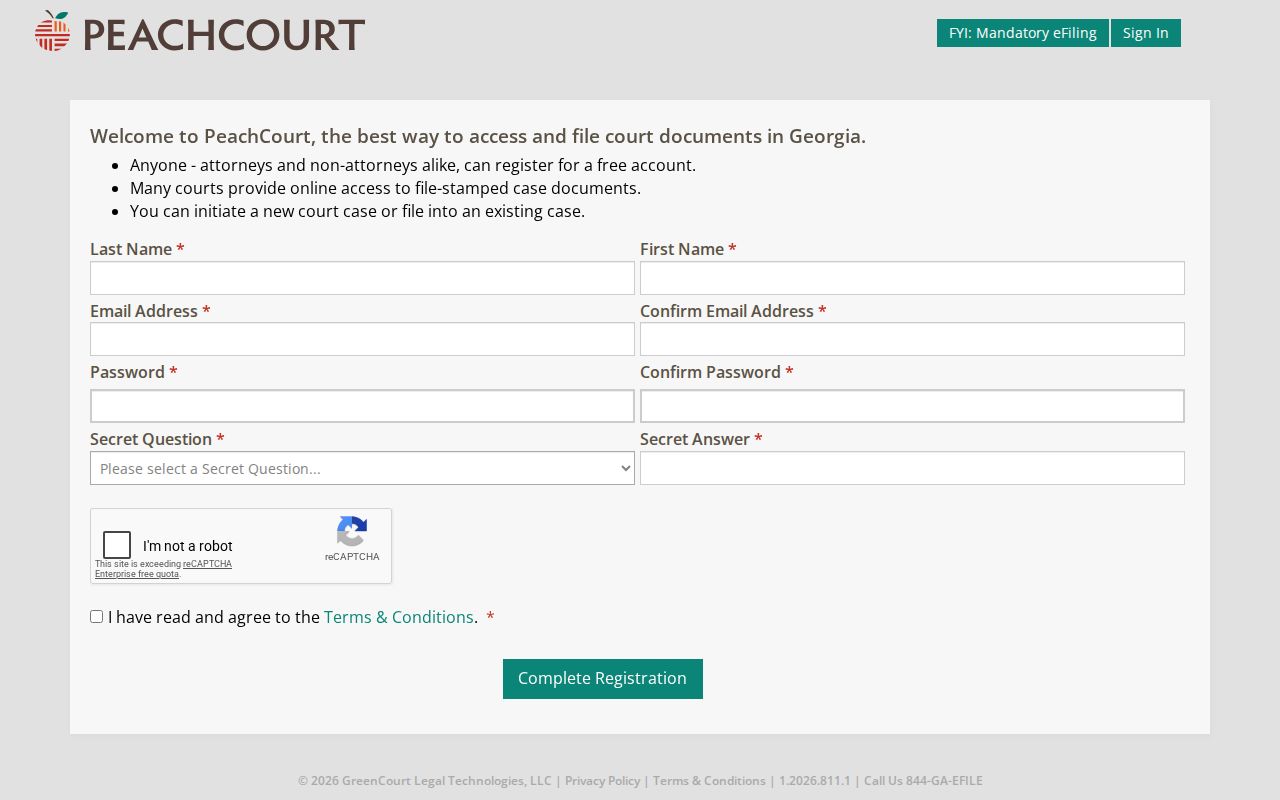
A login wall is not a sealed-record finding. If the online search fails, contact the clerk directly for terminal or copy access.
| Layer | Use | Limit |
|---|---|---|
| Filing | Submits eligible civil papers | Account and court rules |
| Documents | Covered electronic copies | May omit sealed or older material |
| Clerk file | Official court record | Access rules still apply |
Inside a Ware County Civil Docket
Uniform Superior Court Rule 39.2 supplies the main field guide. Parties, lawyers, cause of action, filing date, costs, service, pleadings, motions, trial details, disposition, post-judgment entries, and appeals all belong on the docket. Think of it as an index and a chronology. Behind those lines, the file may hold the complaint, answer, exhibits, and orders.
| Identity | Action number, parties, attorneys, category, and filing date. |
|---|---|
| Service | Date and method used to deliver process. |
| Filings | Complaint, answer, motions, orders, and filed dates. |
| Setting | Hearing or trial date, judge, and trial type where recorded. |
| Disposition | Settlement, judgment, dismissal, mistrial, or administrative termination. |
| Later events | Fi.Fa., transcript, new-trial motion, appeal, and remittitur. |
A party name alone proves no claim. The word "Closed" will not tell you whether the case ended by judgment, dismissal, settlement, or an administrative event, so read the exact disposition.
Ware Civil Courts Compared
Civil jurisdiction is divided. Superior Court takes broad civil and domestic matters, while State Court is a county-based court of limited jurisdiction. Magistrate Court handles claims generally up to $15,000 under Georgia Courts guidance, and Waycross Municipal Court is not a general civil court.
| Court | Typical work | Starting route |
|---|---|---|
| Superior | Broad civil, domestic, equity, contempt | Serving clerk and PeachCourt |
| State | County civil matters within its jurisdiction | State Court and PeachCourt |
| Magistrate | Disputed claims, generally through $15,000 | Magistrate clerk and eFileGA |
The wrong court yields an empty result. A State Court action stays out of Superior Court records unless a transfer, appeal, or separate case creates another entry.
Civil Case Types on the Docket
The Ware clerk handles civil and domestic processing, garnishments, adoptions, child support, and land and property functions. Rule 39.2 adds complaints, motions, URESA matters, contempt, modifications, and other civil categories except adoptions. Sensitive case families can carry distinct access limits.
- General complaints, contracts, and other civil actions
- Domestic relations, support, contempt, and modifications
- Garnishment and post-judgment enforcement
- Magistrate claims within that court’s jurisdiction
- Property litigation, distinct from the land index
Adoption and protected domestic material may be restricted. A real-estate index can point to a related instrument, but it never replaces the civil docket.
Ware Magistrate Civil Filing Route
Ware Magistrate Court sits at 310 Albany Avenue, Waycross, Georgia 31501. The county links eFileGA for eligible civil filings. Mail goes to P.O. Box 17, Waycross, Georgia 31502, or call (912) 490-4373. Hours run weekdays from 9:00 a.m. to 5:00 p.m. The Georgia eFileGA landing page is where that filing portal opens.
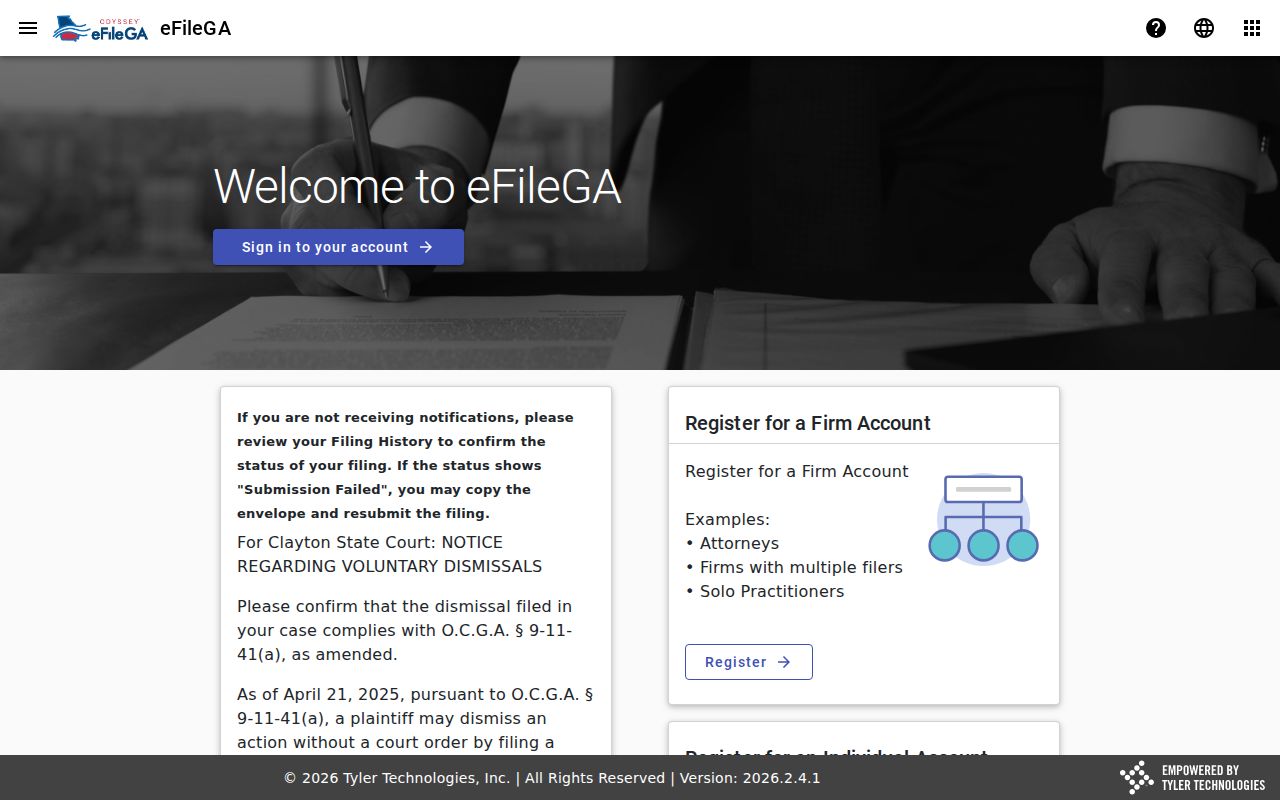
The portal handles filing. It does not put every public case result or document online.
Track service, any answer or default, the judgment, and any appeal or transfer. Those steps decide which clerk holds the later records.
Ware Civil Docket Settings
A setting shows what is scheduled, not what happened. Ware's First Judicial District page posts no current circuit calendar. It sends date questions to the clerk. Check the latest docket entry, the scheduling order, and any court notice. After a continuance, confirm the date again.
Settings cover motion hearings, status conferences, calendar calls, bench trials, or jury trials. A new date may show up in a later order. It may not replace an old line. The Ware court dates resource separates calendars from full filing histories.
Note: A stale online date should never override a newer clerk notice, signed order, or direct court confirmation. Trust the freshest word from the court itself.
Ware Civil Outcomes Need Context
Rule 39.2 permits several closing terms. A settlement records an agreed resolution, a dismissal ends claims as stated, and a judgment records a court decision. Administrative termination can close a docket for an administrative reason and is not always a merits ruling. A mistrial ends a trial without a final verdict.
- Service
- Formal delivery of process, with date and method where required.
- Fi.Fa.
- A judgment-enforcement instrument that can appear after judgment.
- Remittitur
- An appellate paper returning jurisdiction to the trial court.
- Disposition
- The result or closing event entered by the court.
Check post-judgment entries, new-trial motions, appeals, transcripts, and remittiturs. The first judgment line is not always the last event.
Ware Civil Docket Access Rules
Uniform Superior Court Rule 21 supports public access unless law or court procedure limits it. Rule 21.6 protects identifiers and special family-violence or stalking details. Adoptions, some domestic records, financial data, and personal details may be sealed, redacted, or excluded. A public caption does not make every filing public. Some pages stay closed by law.
Key rules:
Uniform Superior Court Rules 21 and 39.2 govern restrictions and civil docket fields.
Georgia Open Records Act guidance explains written custodian requests for covered records.
The county Board form is not the default route for a court file. Ask the civil clerk how requests are made. Do not apply the Board's ten-cent rate to court copies; the clerk sets its own copy and certification prices.
Paper Access for Ware Civil Dockets
Need a Ware County civil docket in person? The clerk's office at 800 Church Street keeps the Superior and State Court civil files. The counter is open weekdays from 9:00 a.m. to 5:00 p.m. Call (912) 490-4340 for the main line. Use (912) 490-4348 for State Court, or (912) 490-4330 for Superior Court. Mail requests go to P.O. Box 776, Waycross, Georgia 31502, once the office has confirmed the format and the fees.
Georgia's e-filing rules leave room for a courthouse public terminal. They also allow free access on paper or through a clerk terminal. Self-represented filers may still file on paper where allowed. Staff cannot offer legal advice. They can, however, point you to the right office, form, and fee. That help covers your court docket request too.
Ware Civil Records Clerk
800 Church Street
Waycross, GA 31501
(912) 490-4340
Mail: P.O. Box 776
Waycross, GA 31502
Want a plain copy or a certified copy? Give the clerk the court, the case number, the document title, and the date. The office offers no public bulk export, no set turnaround, and no posted certified-copy price.
A solid request names the exact court, action number, paper title, and date range. No case number handy? Supply the filed party's name and your best guess at the year. Then ask which index the clerk can search. Say up front what you want: to inspect the file, get a plain copy, or get a certified copy. Mail requests should confirm payment, return postage, and the current fee first. Older matters may sit in paper or archival files. Recent filings may not be indexed online yet. Ask the clerk about these limits rather than assuming a court record does not exist.